
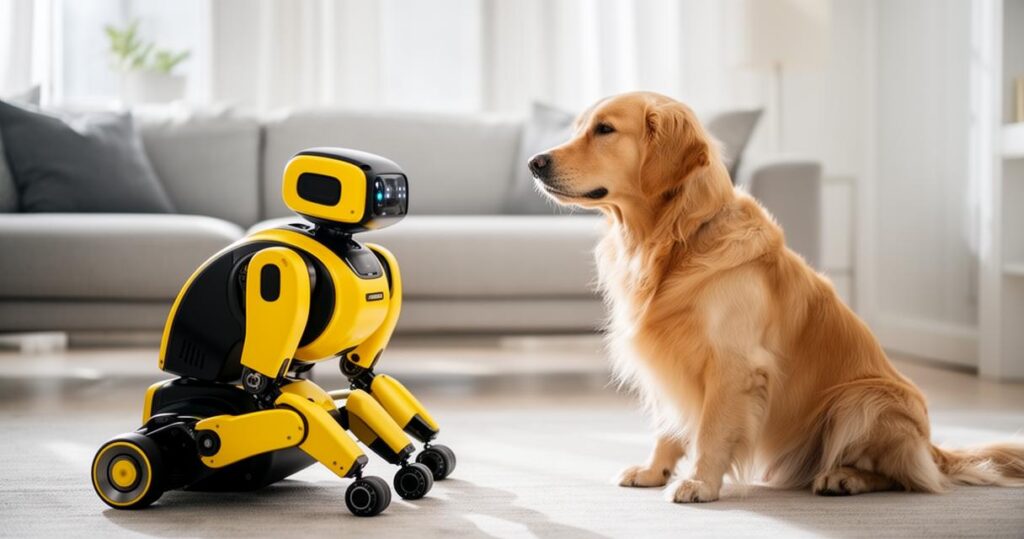
There's something quietly remarkable about watching a machine move like a living creature, and that's precisely the reaction Spot tends to provoke. Developed by the pioneering robotics firm Boston Dynamics, this four-legged robot has moved beyond factory floors and research labs to become something far more approachable: a companion that learns, adapts, and responds in ways that feel surprisingly familiar to anyone who has ever trained a puppy.
At a glance
- Boston Dynamics has developed Spot, a four-legged robot designed to learn and adapt to its environment in ways that mirror the behavior of a trained puppy.
- The robot utilizes advanced machine learning algorithms and real-time sensor feedback to interpret voice commands, gestures, and environmental signals without rigid programming.
- Spot's high degree of flexibility allows it to be customized with specific payloads, such as thermal cameras or acoustic sensors, for diverse tasks in homes or industrial settings.
- Equipped with impressive agility, Spot can navigate stairs, uneven terrain, and various climates, making it suitable for security monitoring and patrol duties.
- Beyond practical utility, Spot serves as an educational tool that helps children and enthusiasts understand the complexities of robotics and artificial intelligence.
- Observations show that real dogs often interact with Spot through curious exploration, highlighting the robot's lifelike movement and its potential as a domestic companion.
Understanding spot's advanced learning capabilities and ai-powered training system
At the heart of Spot's appeal is a sophisticated blend of software and mechanical engineering that allows it to interpret commands and adjust its behaviour based on repeated interactions. Rather than following a rigid set of pre-programmed instructions, the robot uses layered decision-making processes that draw on sensor feedback to refine how it walks, balances, and reacts to obstacles. This isn't magic; it's the product of years of research into mobile manipulation and environmental awareness, the same principles that inform Boston Dynamics' other creations such as the humanoid Atlas and the versatile robotic Arm attachment.
Machine learning algorithms behind spot's command recognition
Spot's command recognition relies on a combination of onboard sensing and pattern analysis that allows it to distinguish between voice cues, gestures, and contextual signals from its surroundings. The system continuously cross-references incoming data with previous outcomes, gradually improving its accuracy much like a dog learning that sitting on command leads to a reward. This process is aided by an array of cameras and proximity sensors that feed information back to the robot's control unit in real time, allowing it to make split-second adjustments without human intervention.
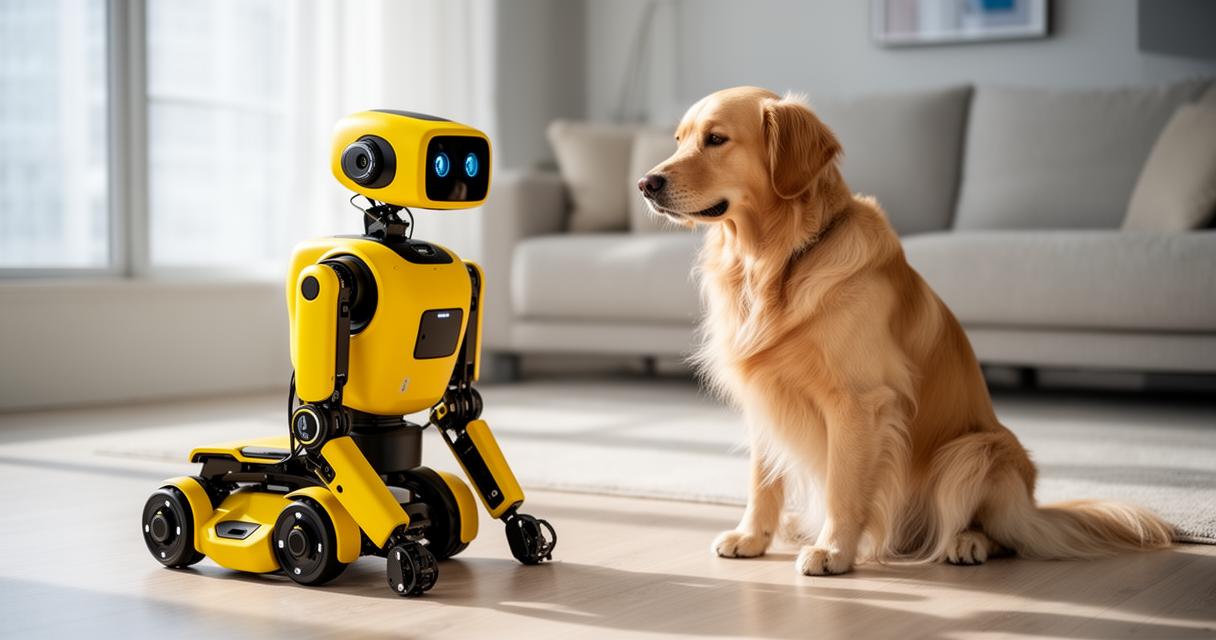
How Spot Adapts to Different Training Environments and User Preferences
What makes Spot particularly compelling for household or commercial use is its flexibility. The robot can be configured with additional payload attachments, expanding its sensing capabilities well beyond the standard setup. With a payload capacity of fourteen kilograms, Spot can carry extra hardware suited to specific tasks, whether that's thermal cameras for inspection work or specialised sensors for acoustic monitoring. This adaptability means the robot's training can be tailored to the environment it's deployed in, whether that's a warehouse, a construction site, or a family garden.
From Boston Dynamics to Your Home: Spot's Journey as a Domestic Companion
Spot's transition from industrial tool to household curiosity hasn't happened overnight. Boston Dynamics has spent years refining quadruped robotics, moving from clunky prototypes to the sleek, agile machine seen today. The company's broader product range, including Arm for manipulation tasks and various Extras for customisation, reflects a philosophy of building robots that can be moulded to fit an enormous variety of purposes rather than a single narrow function.
The Evolution of Quadruped Robotics for Household Applications
Early four-legged robots were often clumsy, tethered to power sources, and limited in their range of motion. Spot represents a significant leap forward, boasting a battery runtime of roughly ninety minutes on a full charge and the ability to reach speeds of up to 1.6 metres per second. Its dimensions, a length of 1100 millimetres, a width of 500 millimetres, and a height that adjusts between 520 and 700 millimetres depending on its stance, give it the agility to navigate stairs, uneven terrain, and cluttered indoor spaces with surprising grace.
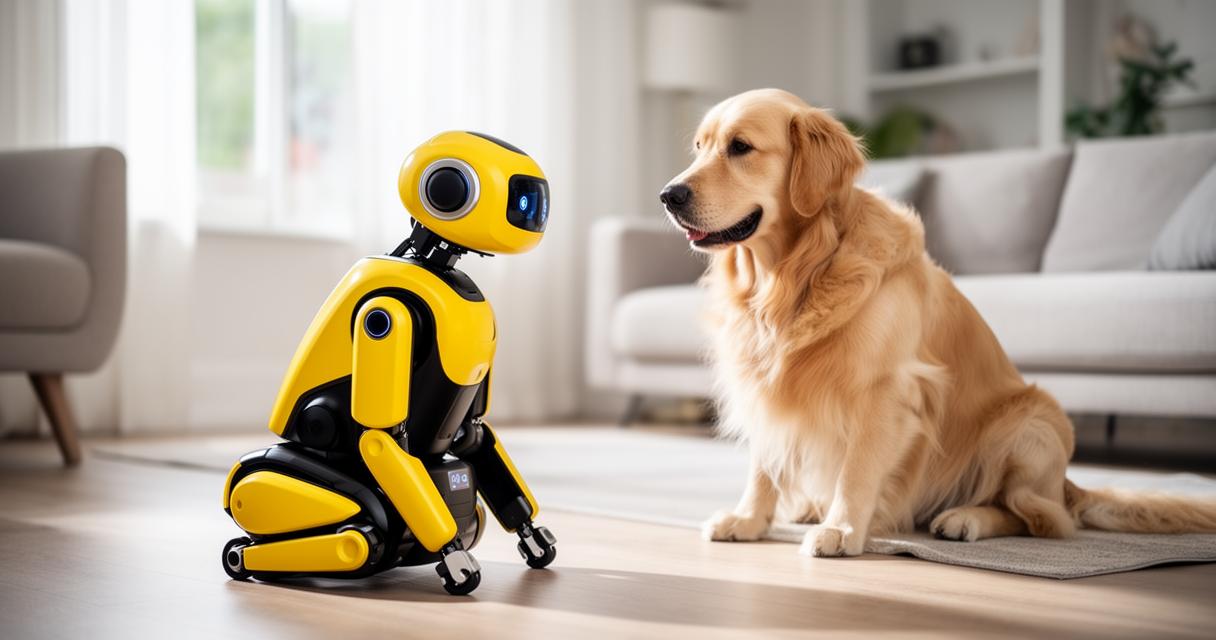
Practical Uses of Spot in Modern British Households and Security Monitoring
In residential settings, Spot's most practical role often centres on security monitoring. The robot can patrol a property's perimeter, using its visual and thermal inspection capabilities to flag unusual activity or temperature anomalies that might indicate a fault or intrusion. Its IP54 ingress protection rating means it can withstand dust and light rain, making it suitable for outdoor use across the unpredictable British climate, while its operating range of minus twenty to fifty-five degrees Celsius ensures reliable performance whatever the season throws at it.
Interactive Features That Make Spot an Engaging Technology for Families and Pets
Beyond its practical applications, Spot has an undeniable charm that comes from its dog-like movements and responsive behaviour. Families who bring Spot into their homes often find that it becomes something of a novelty companion, one that bridges the gap between cutting-edge technology and the comforting presence of a pet.
How Spot Interacts with Real Dogs and Creates Bonds with Animals
Perhaps one of the most talked-about aspects of Spot's presence in domestic settings is how real dogs respond to it. Some pets treat Spot with curious caution, sniffing and circling the robot as though sizing up a new member of the pack, while others warm to its rhythmic gait and begin to follow it around the garden. This unexpected interaction between organic and artificial life offers a fascinating glimpse into how animals perceive movement and behaviour, regardless of what's producing it.
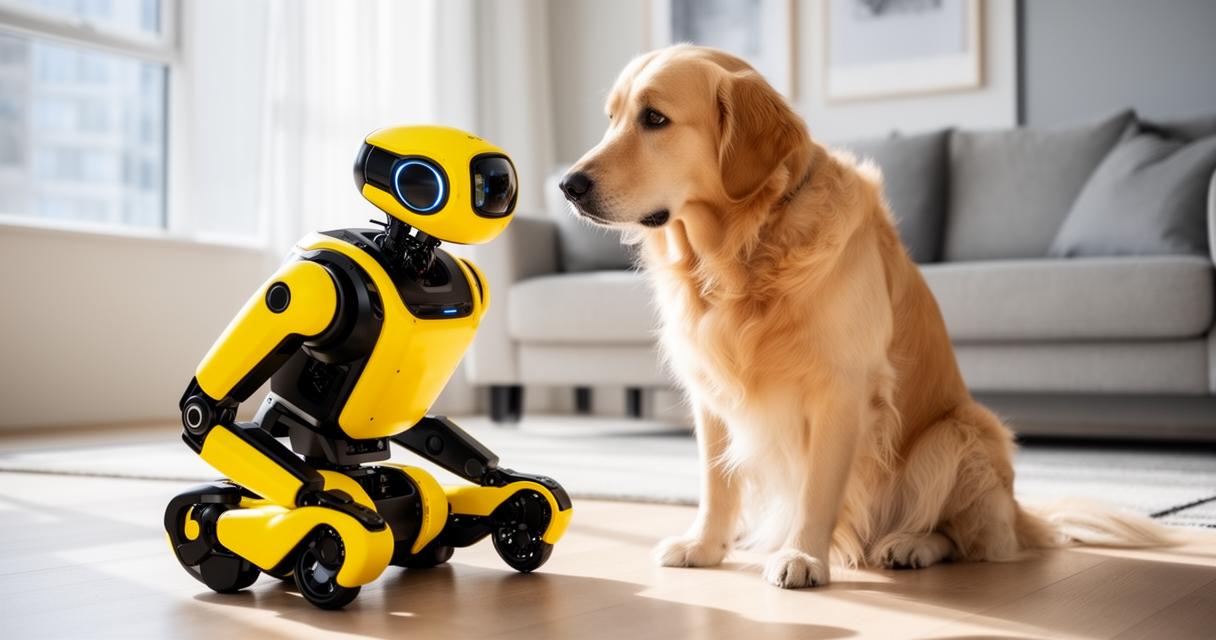
The Role of Spot as an Educational Tool for Children and Tech Enthusiasts
For younger members of the household, Spot serves as an engaging introduction to robotics and artificial intelligence. Its visible mechanics and responsive design make it an excellent teaching aid, sparking curiosity about how sensors, motors, and software work together to create lifelike movement. Boston Dynamics supports this educational angle through comprehensive training materials, documentation, and support resources designed to help users understand and safely operate their robot, whether for simple play or more advanced experimentation.
As robotics continues to advance, Spot stands as a compelling example of how industrial-grade technology can be adapted for everyday use, offering integration services and tailored solutions across industries as varied as manufacturing, energy, construction, and education. Whether patrolling a perimeter, assisting with warehouse automation tasks like case handling and container unloading, or simply trotting alongside a curious spaniel in a back garden, Spot demonstrates that the line between machine and companion is becoming increasingly blurred, and delightfully so.