
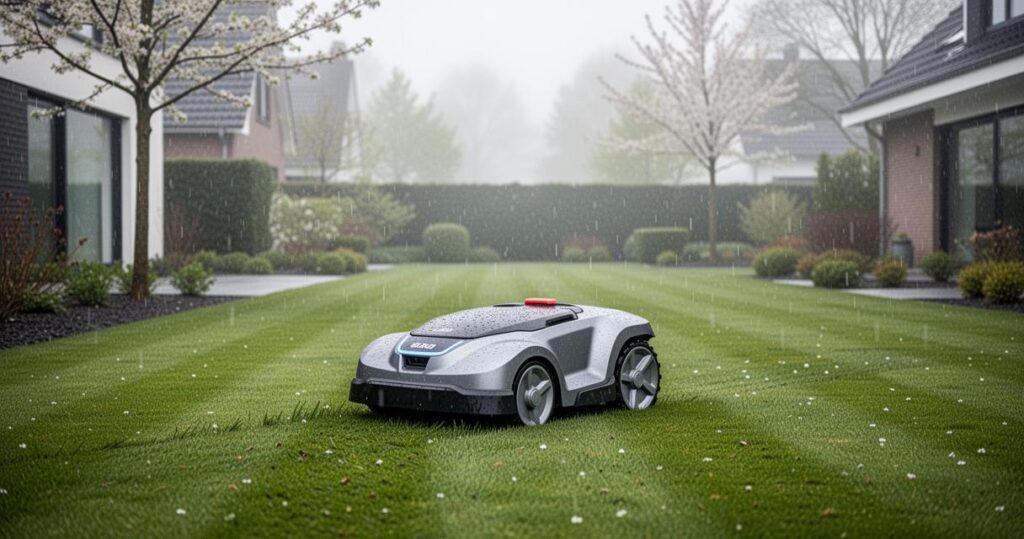
Few questions divide garden enthusiasts quite as much as whether a robotic lawnmower can safely operate in the rain. For anyone who has invested in garden automation, the prospect of pausing the mowing schedule every time clouds gather overhead is hardly appealing. The good news is that modern autonomous mowers are built with wet conditions firmly in mind, though understanding their limits is essential to getting the best from them.
The essentials
- Mowing wet grass with a robotic mower can cause grass to tear rather than slice, which increases the risk of fungal infections and lawn disease.
- Frequent, short mowing cycles used by robotic mowers produce fine clippings that act as mulch, promoting better overall lawn health.
- Robotic mowers use advanced rain sensors to detect precipitation and return to their charging stations, preventing damage to the machine and the lawn.
- Loss of traction on wet slopes can be managed through intelligent navigation software, specialized tire designs, and careful configuration of boundary zones.
- Mobile applications allow users to customize mowing schedules and define specific zones to avoid sensitive or slippery areas during inclement weather.
- Regular maintenance, such as checking for debris buildup on blades and ensuring the integrity of the peripheral boundary wire, is essential for machine longevity.
- Selecting a model with high-quality waterproofing, robust sensors, and adjustable settings is crucial for maintaining a healthy lawn in diverse weather conditions.
Impact of rain and wet grass on your robotic mower’s performance
How damp lawn conditions affect cutting quality and grass life
When rain falls, the dynamics of cutting wet grass change considerably. Wet blades of grass are heavier, more flexible, and far more prone to tearing rather than being cleanly sliced. This tearing effect is not merely cosmetic: it leaves the grass open to fungal infections and disease, particularly if the clippings clump together and smother sections of the lawn. Lawn health can deteriorate surprisingly quickly when this happens repeatedly across a season.
A well-designed robotic lawnmower addresses this challenge through precision lawn care. Rather than waiting for the grass to grow tall before tackling it, these machines operate on frequent, shorter mowing cycles. By keeping grass growth consistently low, they remove only a small amount of blade each time, producing fine grass clippings that filter back into the soil rather than lying on the surface. This mulching approach actively supports lawn health and reduces the likelihood of disease taking hold. The lightweight construction of many models also helps to prevent soil compaction, which is a genuine concern when heavy machinery crosses saturated ground repeatedly.
The pivoting mower blades found on certain models are another advantage worth noting. Because they flex on contact rather than rigidly striking the grass, they maintain a sharper edge for longer, delivering a cleaner cut even on damp mornings. This consistent cut height contributes to a uniform lawn appearance and reduces the stress placed on each grass plant.
Managing traction near the peripheral wire and boundary zone
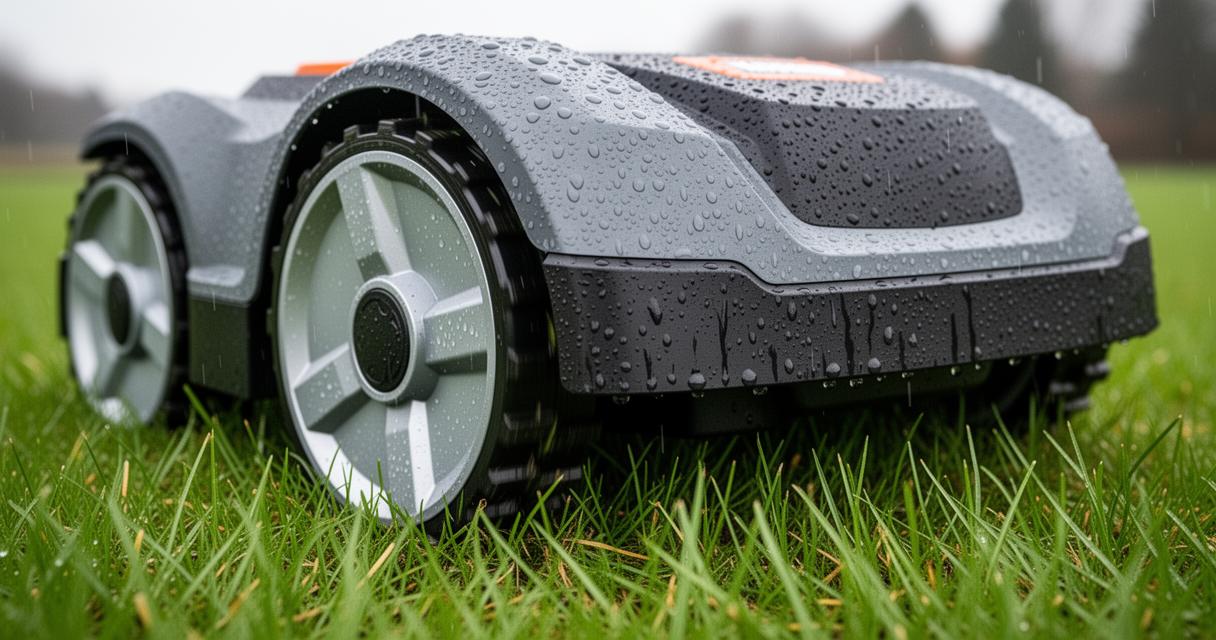
Rain introduces a secondary challenge that is easy to overlook: traction. On slopes or near the edges of the lawn, wet grass becomes slippery, and a mower that loses grip near the peripheral cable risks wandering outside its designated zone or, worse, damaging the boundary wire itself. Most contemporary models handle this through a combination of tyre design and intelligent navigation software that slows the machine and adjusts its path when conditions deteriorate. The peripheral wire, which is typically buried just beneath the turf or pegged at ground level, is a critical component: keeping it intact ensures the mower always knows where its operating area ends. Regular inspection of the peripheral cable after heavy rainfall is a sensible precaution, as water movement in the soil can occasionally shift or expose the wire over time.
Essential features and sensors for maintaining your garden in bad weather
Role of the rain sensor in protecting your mower and charging station
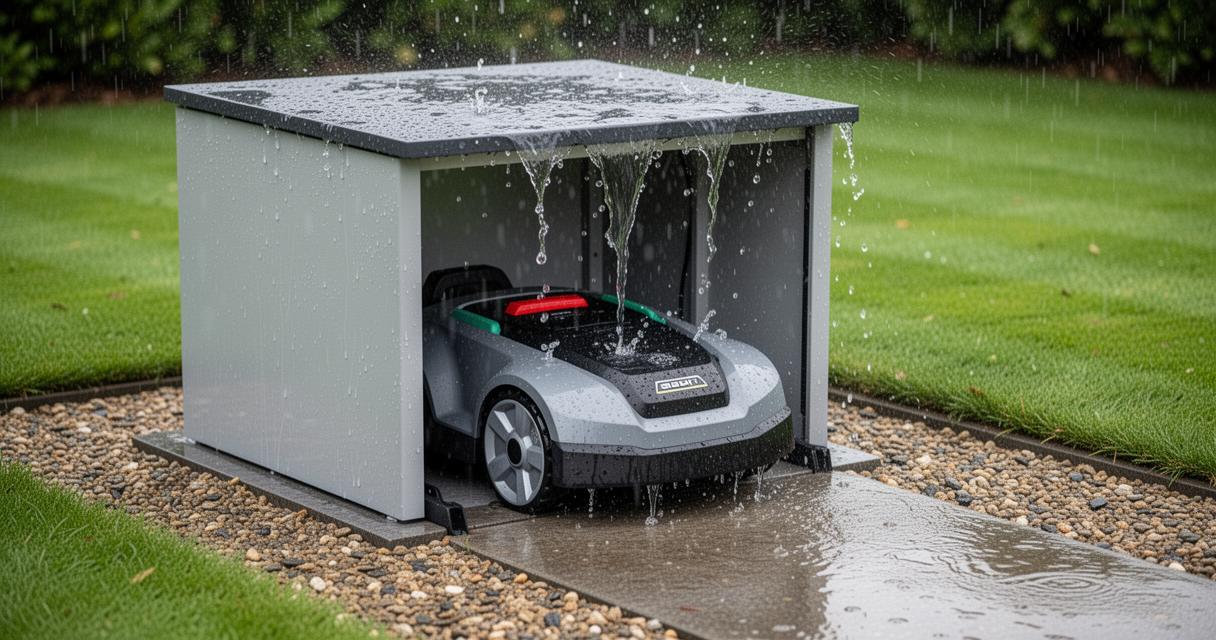
The rain sensor is arguably one of the most important components on a weatherproof mower. When rainfall is detected, the sensor triggers the machine to return to its charging station, where it shelters until conditions improve. This protects both the mower’s electronics and the lawn itself from unnecessary wear during heavy downpours. It is worth noting that not every shower warrants an immediate retreat: many sensors can be configured to respond only above a certain intensity of rainfall, allowing light drizzle mowing to continue uninterrupted. The charging station itself should be positioned in a sheltered spot where possible, ideally with a roof or cover, to extend the life of the docking contacts.
For those invested in smart gardening, the sophistication of these sensors represents a significant step forward in outdoor maintenance. Rather than relying on a fixed schedule that ignores the weather entirely, a mower equipped with a quality rain sensor makes genuinely intelligent decisions about when to operate, balancing lawn upkeep against the conditions underfoot.
Using the mobile application to adjust mowing duration and active zones
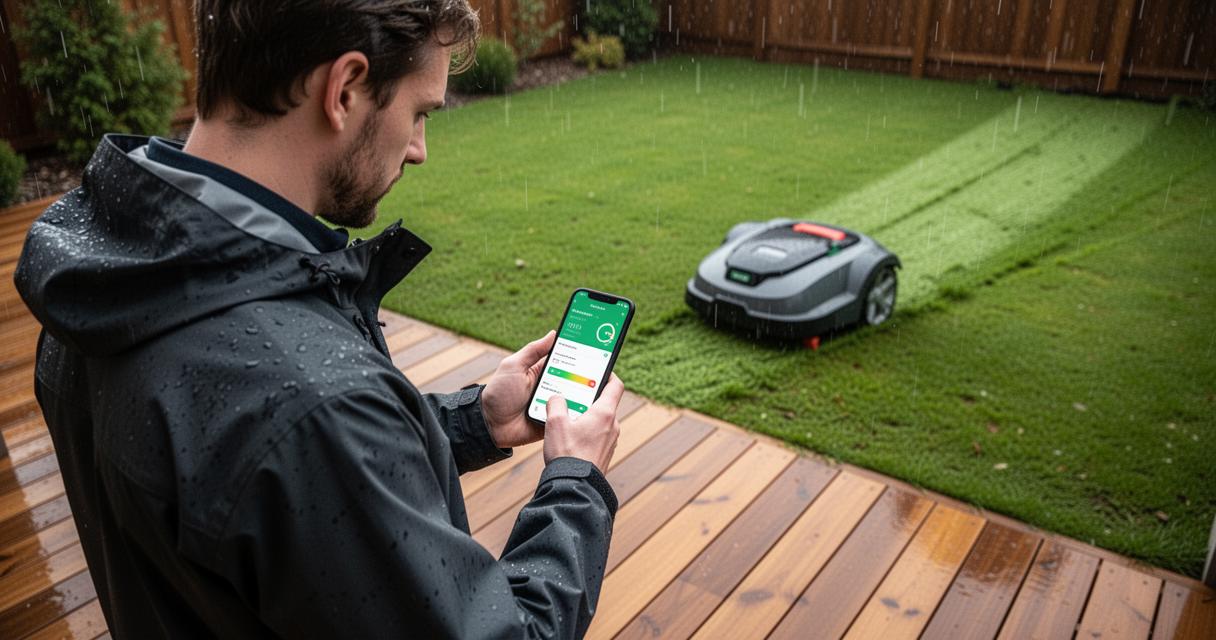
The mobile application that accompanies most modern robotic lawnmowers offers a level of control that was unthinkable even a decade ago. Through the app, it is possible to adjust the mowing duration for specific periods, define active zones within the garden, and set a mowing schedule that accounts for typical weather patterns in your area. If you know that Tuesday afternoons tend to be wet in your part of the country, you can programme the mower to concentrate its efforts on other days without any manual intervention required.
The ability to delimit specific areas is particularly useful in mixed gardens, where some sections (perhaps near a pond, a flowerbed, or a sloped border) are best avoided during or after rainfall. By carving the lawn into distinct zones within the application, you retain full control over which areas receive attention and when, making autonomous mowing a genuinely adaptable solution for British weather.
Best practices to prolong the life of your automated mower
Care and maintenance of the peripheral cable and underside area
To prolong the working life of your machine, routine attention to a few key areas makes a substantial difference. The underside of the mower, where the pivoting mower blades sit, can accumulate wet grass debris over time. While many designs incorporate a self-cleaning function that minimises build-up, a periodic manual inspection ensures that nothing is obstructing the blade assembly. A soft brush and a gentle rinse with water are usually all that is needed, avoiding any high-pressure jets near the motor housing is advisable.
The peripheral cable deserves its own routine check. After sustained wet weather, walk the perimeter of the mowing zone to confirm that the wire remains properly secured and has not been disturbed by burrowing animals or surface water run-off. Any exposed section should be re-pegged or re-buried promptly. A damaged cable not only disrupts the mowing area boundary but can also confuse the mower’s navigation system, leading to inefficient patterns or unexpected stops.
Selecting suitable models designed to handle wet garden terrain
Not all robotic lawnmowers are created equal when it comes to wet conditions. When choosing between available models, it pays to look closely at the manufacturer’s specifications regarding waterproofing, the quality of the rain sensor, the steepness of slopes the machine can handle on slippery ground, and whether the mobile application supports granular zone management. Lightweight mowers with a low centre of gravity tend to perform better on wet, uneven terrain, while those fitted with sensors for obstacle detection add an extra layer of protection for both the machine and the garden.
Ultimately, automatic grass cutting in rainy conditions is not simply possible, with the right model and the right settings, it can become a quietly effective cornerstone of year-round lawn maintenance. The key lies in selecting a machine whose features match the realities of your garden, configuring it thoughtfully through the mobile application, and carrying out the modest upkeep that keeps both the mower and the lawn in excellent condition through every season.